It is the question our specialists are asked more than any other: is a Rolex a good investment? The honest answer — the one a dealer with a lifetime relationship to protect gives you, rather than the one that closes a quick sale — is: yes, within limits, if you buy the right watch at the right price. Here is the 2026 picture.
What actually happened to Rolex prices
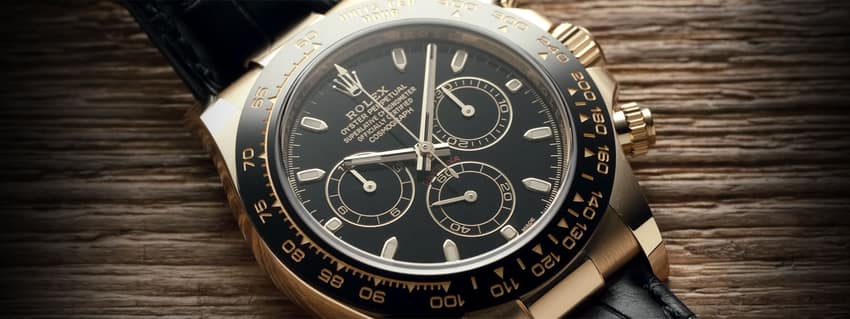
Between 2020 and early 2022, pre-owned prices for steel sports Rolex went vertical — a Daytona 116500LN briefly traded at three times its retail price. That was a bubble, and it burst: the market corrected sharply through 2023, drifted in 2024, then found its floor. Since 2025 the pre-owned market has been quietly healthy — transaction volumes up, prices stable to gently firming, speculation largely gone. What remains is the durable, decades-old truth: Rolex holds value better than almost anything else you can wear.
Which models hold value best
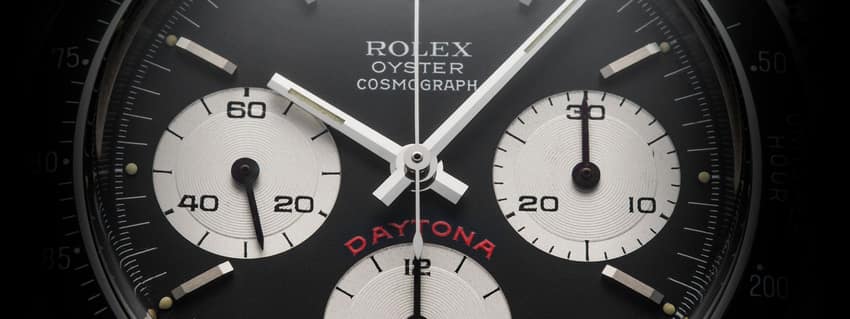
- Professional steel sports models — the Submariner, GMT-Master II and above all the Cosmograph Daytona — remain supply-constrained at retail and consistently liquid pre-owned.
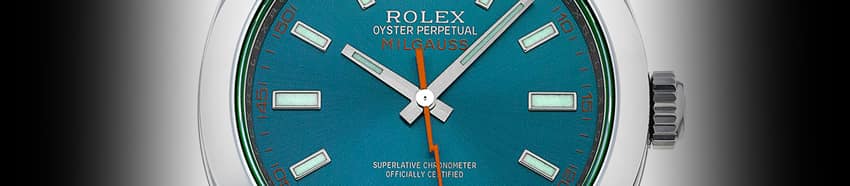
- Discontinued references with a following — the “Hulk” Submariner, “Pepsi” GMTs, the Milgauss — benefit from fixed supply.
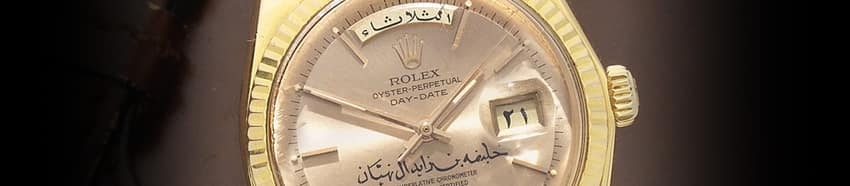
- The classics — Datejust and Day-Date — appreciate slowly if at all, but depreciate remarkably little, making them superb value stores rather than growth assets.
Be more cautious with heavily diamond-set pieces and unusual dial configurations bought at big premiums: their market is thinner, and thin markets are volatile in both directions.
The pre-owned advantage
A new watch bought at retail must first earn back the dealer margin before it owes you nothing. A pre-owned Rolex bought at market price skips that entirely — the first owner absorbed it. This is the single most reliable “investment edge” in watches, and it requires no speculation at all: buy a clean, authenticated example of a desirable reference at today’s market level, and time does the rest.
Rolex vs traditional investments
Let us be honest about the comparison. Over most ten-year windows a broad index fund will out-return a watch, and a watch pays no dividend. But no index fund tells the time, marks the birth of a child, or goes on your wrist at your daughter’s wedding. The rational way to think about a Rolex is as a store of value you get to live with — an asset with a yield paid in daily pleasure. If pure return is the goal, buy the fund. If the goal is to own something wonderful that will likely be worth much of what you paid — possibly more — buy the watch.
Five rules for buying with an investor’s eye
- Condition is compounding. Unpolished, sharp examples appreciate; tired ones merely exist.
- Keep the set complete. Box and papers add value now and at resale.
- Buy liquidity. A Submariner sells in days; an exotic piece can take months.
- Buy authenticated. A watch without verifiable authenticity is unsaleable at full value — our process exists for precisely this reason.
- Buy what you love. The only guaranteed return is the one on your wrist.
One final note: nothing here is financial advice — it is market experience, offered honestly. If you are weighing a purchase or wondering what your current watch is worth in today’s market, get a free valuation or talk to a specialist. We will give you the same answer we would give a friend.