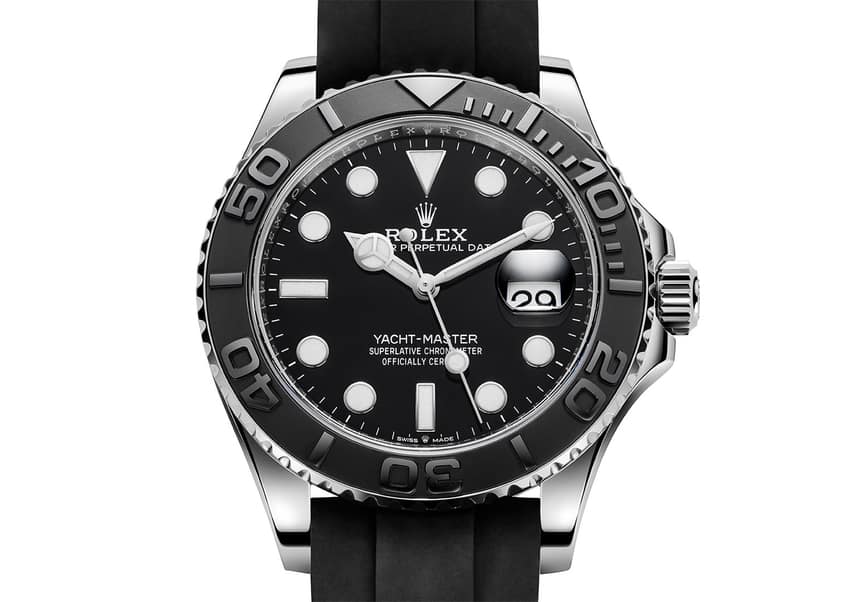
Buying a pre-owned Rolex should be one of life’s great purchases — and in the UK, there has never been a better time to do it. The second-hand market is deep, prices have settled to sensible levels after the speculative froth of recent years, and a used Rolex bought well can be enjoyed for decades and still hold meaningful value. But it is also a market that punishes the unprepared. This guide sets out exactly how our specialists would buy a used Rolex in 2026.
Why buy pre-owned rather than new?
Three reasons. First, availability: the most desirable professional models — the Submariner, GMT-Master II and Cosmograph Daytona — remain waitlisted at authorised dealers, while the pre-owned market lets you buy the exact reference you want, today. Second, value: a pre-owned watch has already absorbed its initial depreciation, so you are buying much closer to the watch’s true market level. Third, choice: only the second-hand market offers discontinued references, vintage pieces and dial variants Rolex no longer makes.
Where to buy a used Rolex in the UK — and where not to
Your options fall into three tiers. Specialist dealers authenticate every watch, service what they sell, grade condition honestly and stand behind the watch with a warranty — you pay a fair retail margin for certainty. Marketplaces and auction sites can be cheaper, but you are buying on the seller’s word: no authentication, no recourse, and the vast majority of fakes change hands exactly this way. Private sales should be reserved for watches you can verify independently before money moves.
Wherever you buy, apply the same test: will this seller still exist, and still answer the phone, if something is wrong with the watch in eighteen months? If the answer is not an obvious yes, walk away.
The five checks before you buy
1. Independent authentication
A genuine specialist will have had the watch examined by a watchmaker — movement, case, dial, bracelet and serial engravings checked against Rolex factory specifications — not merely “looked over”. Ask how the watch was authenticated and expect a specific answer. Our own process is documented on our authentication page, and it is the reason every watch we sell is guaranteed genuine for life.
2. Condition, graded honestly
Photographs should be high-resolution, unretouched and show the actual watch — not a stock image. Look for even bevels on the lugs (over-polishing rounds them off), crisp bracelet links with minimal stretch, and a bezel that matches the watch’s age. “Unpolished” matters to collectors; “sympathetically refinished” is acceptable when disclosed.
3. Box and papers
A full set — original box, warranty card or papers — typically adds five to ten per cent to the price and makes the watch easier to resell. But a watch without papers is not a watch to avoid: references from before 2007 frequently lack them, and a lifetime authenticity guarantee from a specialist stands in their place. What matters is that the listing tells you exactly what is included.
4. Service history
A Rolex runs beautifully for years, but it is a machine: gaskets dry out, lubricants age. Ask when the watch was last serviced and pressure-tested. Every watch that enters our vault is timed, regulated and pressure-tested before sale — if a service is due, it is done first.
5. Warranty
Rolex’s factory warranty is five years from first retail sale, so most pre-owned watches are outside it. A serious dealer replaces it with their own: ours is 24 months on every watch, with 14-day returns.
What should you pay in 2026?
Guide prices for good pre-owned examples in the UK market this year:
- Oyster Perpetual — from around £2,600
- Datejust — from around £3,550; recent 36mm references from roughly £6,500
- Air-King — from around £3,070
- Explorer — from around £5,600
- Submariner — from around £6,595; current ceramic references £9,000–£13,000
- GMT-Master II — from around £7,290; “Pepsi” and “Batman” bezels command premiums
- Day-Date — from around £10,000
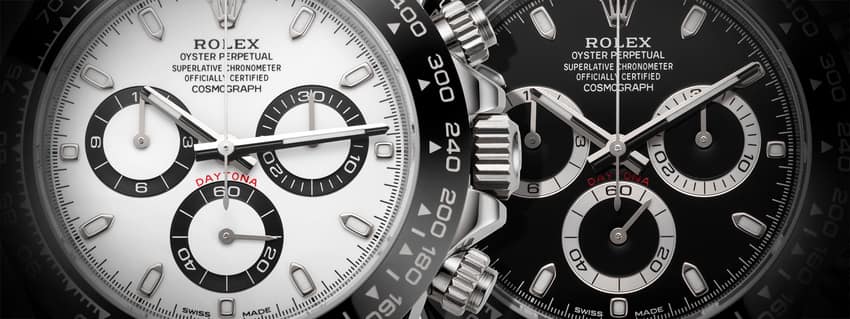
- Cosmograph Daytona — from around £13,005
Condition, box and papers, and dial rarity move individual watches well beyond these floors. If a price looks dramatically below market, that is not a bargain — it is a warning.
Paying for it: finance and part-exchange
A part-exchange is often the smartest route to your next watch: one transaction, no private-sale risk, and the trade-in value offsets the price immediately. If you are upgrading, have your current watch valued before you start shopping so you know your true budget.
The short version
Buy the seller before you buy the watch. Insist on independent authentication, honest grading, a real warranty and full disclosure of box, papers and service history. Do that, and a pre-owned Rolex is not a gamble — it is simply the intelligent way to own one. When you are ready, explore the vault: every watch is authenticated, serviced and ready to wear.