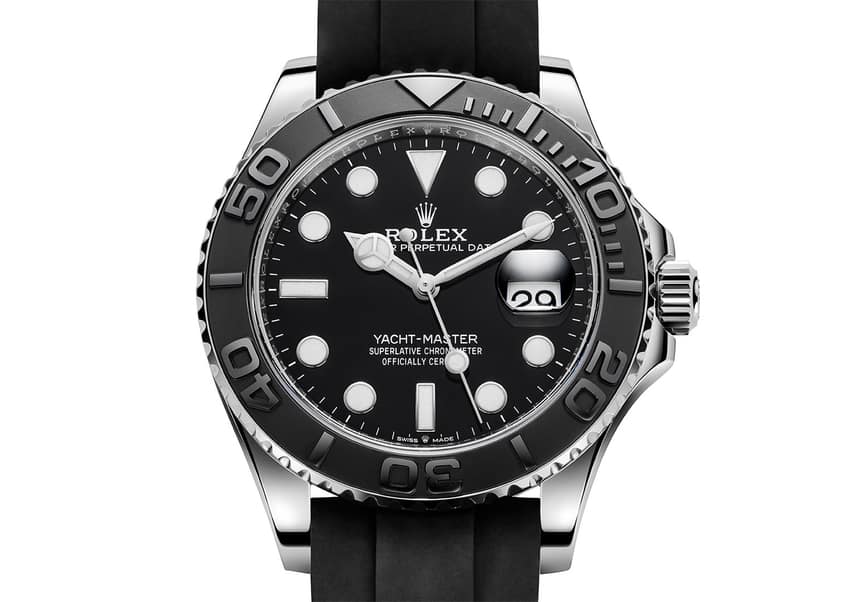
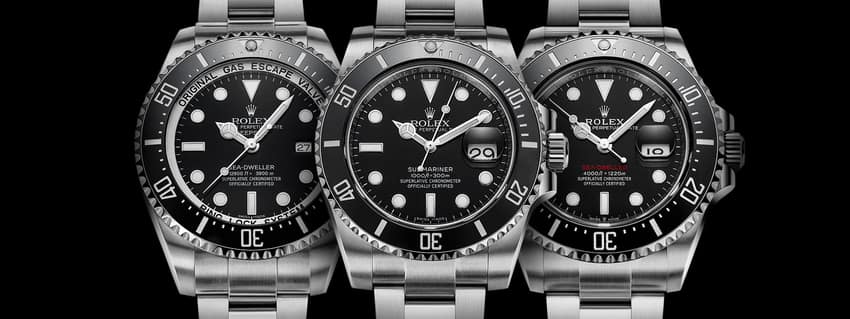
The uncomfortable truth about fake Rolex watches in 2026 is that the good ones are no longer obvious. So-called “superclones” copy the weight, the sweep of the seconds hand and even the movement architecture of the genuine article. The £20 market-stall fake died years ago; what circulates now on marketplaces and in private sales can fool an experienced eye at arm’s length. Here are the checks our watchmakers actually rely on.
1. Weight and feel
Rolex uses 904L stainless steel, 18ct gold and 950 platinum. A genuine watch has a density and a coldness that plated base metal cannot replicate. If a Submariner feels light, hollow or “rattly” on the wrist, be suspicious — but note the reverse is no longer proof: good fakes now weight their cases.
2. The seconds hand — forget the old myth
“A real Rolex sweeps, a fake ticks” is twenty years out of date. Modern fakes use automatic movements that sweep convincingly. What they cannot replicate is the quality of the motion under a loupe: a genuine calibre beats at 28,800vph with perfectly even amplitude. Watch the hand, not the sweep.
3. The Cyclops lens
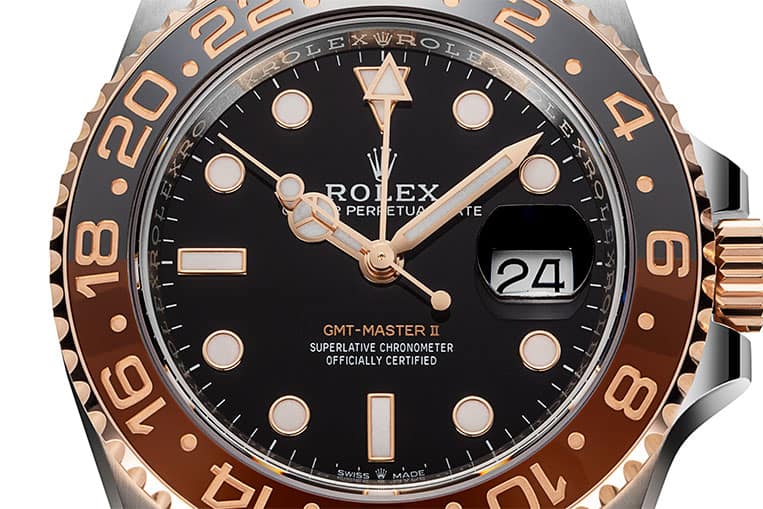
The date magnifier on a genuine Rolex magnifies 2.5×, so the date fills the lens. Fakes routinely manage 1.5× or less — the date sits small inside the bubble. It remains one of the fastest tells on a Submariner Date, Datejust or GMT-Master II.
4. The rehaut engraving
Since the mid-2000s, Rolex has engraved “ROLEXROLEXROLEX” around the rehaut (the inner ring between dial and crystal), with the serial number at six o’clock and a tiny coronet at twelve. On a genuine watch the engraving is machine-perfect, evenly spaced and precisely aligned with the minute markers. On fakes it is often shallow, wavy or misaligned — check it with a loupe.
5. Serial and case-back details
Serial engravings between the lugs on older watches should be deep, clean and catch the light like polished glass; acid-etched fakes look grey and grainy. And with a tiny number of vintage exceptions, Rolex does not make display case backs — if you can see the movement through the back of a “Rolex”, it is not a Rolex.
6. Dial printing under magnification
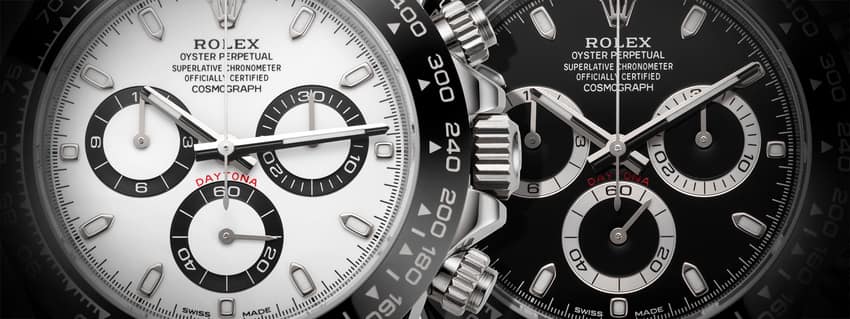
This is where fakes die. Genuine Rolex dial text is sharp, glossy and perfectly weighted even at 10× magnification; counterfeit printing shows fuzzy edges, ink bleed and inconsistent spacing. On a Daytona, check the sub-dial rings: the concentric circles should be flawless.
7. The crown and its logo
The winding crown’s coronet should be finely detailed with well-defined points, and the crown should screw down with a silky, precise action. Gritty threads and soft, blobby logos are counterfeit hallmarks.
8. Water resistance
No counterfeiter pressure-tests. A genuine Oyster case seals to 100m, 300m or beyond; fakes usually fail at the first gasket. This is why a professional pressure test is part of every authentication we perform — it exposes both fakes and genuine watches with tired seals.
9. Paperwork, provenance — and price
Counterfeit warranty cards now exist, so papers alone prove nothing: the card, serial and watch must corroborate one another, which is exactly what a specialist checks. And the oldest tell remains the best one — a genuine Submariner does not sell for £2,000. If the price is dramatically below market, you already know why.
The only check that really matters
Every test above can be studied by counterfeiters, and the best fakes now require the movement to be inspected — something only a watchmaker can do. That is the real answer: buy the seller, not the listing. Every watch at The Crown Vault passes our multi-point authentication — movement out, case open — before it enters the vault, and authenticity is guaranteed for life. If you already own a watch you are unsure about, our specialists will examine it discreetly and without judgement.